The Slow Way Home
On an early Saturday morning in December, I found myself on a railway platform in Bangalore, waiting for the arrival of the train that would take me, in its own time and temperament, to Jamshedpur. I was undertaking a break journey – changing trains at Kharagpur the next day, if the timetable held. This plan felt sensible on paper and faintly romantic in my mind.
What follows are moments gathered along the way: glances exchanged, stations passed in silence, landscapes glimpsed. There are delays and discomforts, and in between them the small negotiations, and the banter that make up life inside a moving train.
In an age of speed, I began to think nothing could be more exhilarating than going slow. In an age of distraction, nothing can feel more luxurious than paying attention. And in an age of constant movement, nothing is more urgent than sitting still.
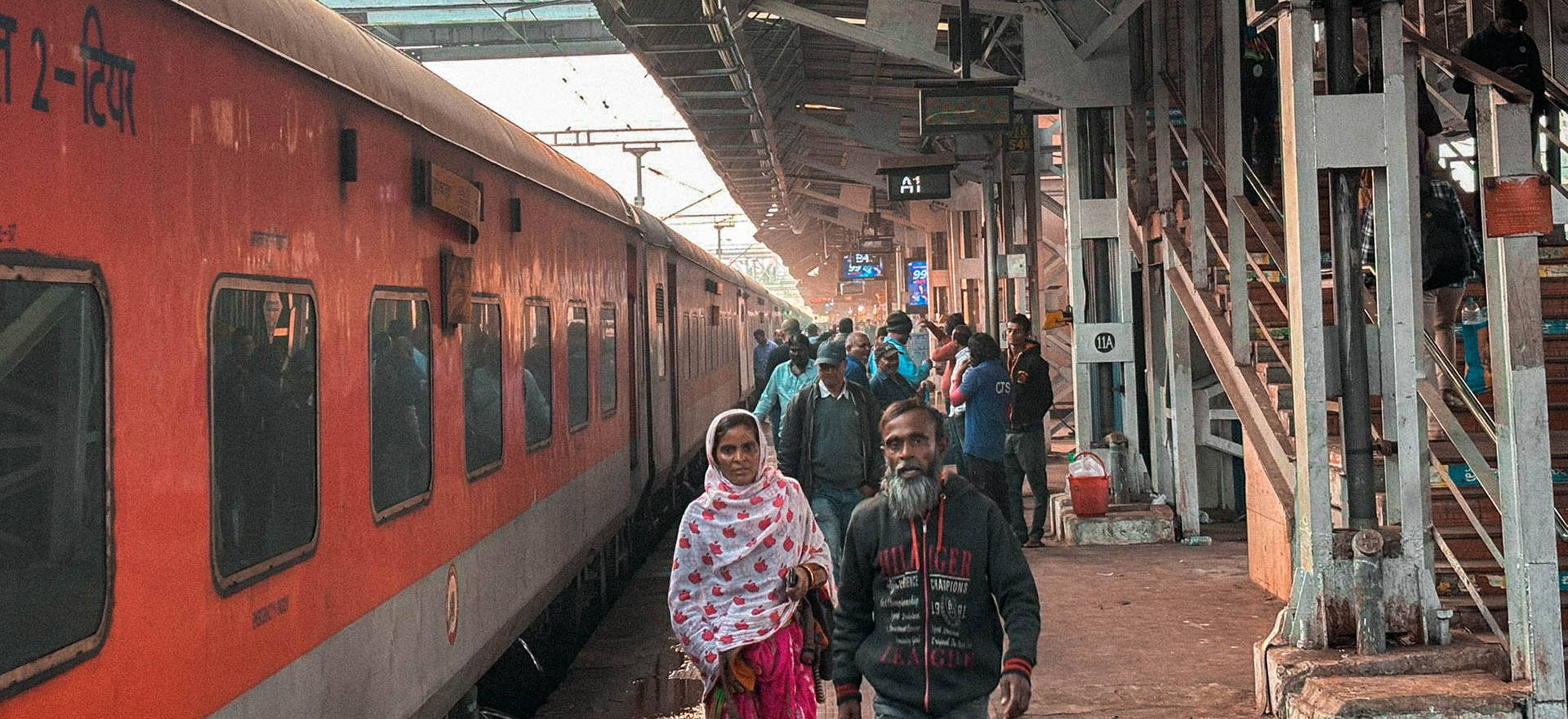
Railway journeys do not really begin when the train starts moving; they begin earlier. On Platforms. Platforms have always been good places for quiet observation. The winters in Bangalore are neither as harsh as those in the North nor as warm and wet as those in the South. It is more benign, with clearer skies, a gentle sun, and just enough chill in the air to be noticeable. On the platform, however, people were dressed for colder places - woollen caps pulled down, jackets worn with a careless abandon, guarded expressions and early signs of impatience – not at anyone in particular but the general idea of lateness. The train was an hour late.
There was time before departure, and I spent it reading and watching. At this hour, a railway platform feels like a stage, with small dramas unfolding quietly in their own corners. I managed to find an empty seat and rested my shoulders. The train arrived shortly after, but very early on the postponed schedule. The platform stirred. People stood up, drew their bags closer, adjusted straps, and prepared themselves. But the doors remained locked. People continued to drift in along the platform, waiting for something to happen. With time to spare and nowhere to go, I opened my book and read - Paul Theroux, complaining his way through an American winter in 1974, heading south till the end of the American continent. There was a terrible blizzard, and everyone he met shared his complaining but helpless tone. He was rueing the fact that he would miss a connection at Chicago.
Ahead of my coach, not too far from where I was sitting stood a young couple, keeping to themselves. The man stood straight, his hair cut short. He looked as though he might belong to the services, though there was no way of knowing for certain. Tall and lean, wearing an orange-trimmed Puma jacket, he stood close to their luggage. His wife, dressed entirely in black – much better outfitted for the long journey, moved about the platform. Every now and then, she came back to him – sometimes with a question, or a complaint at the late departure (it was 11:45 AM and counting). And he indulged her with a calm reassurance. There was no impatience in him. A bit later, he gave up on explaining and reached for his phone instead. He asked to take her picture. She smiled then, and for a moment the delay seemed to matter less.
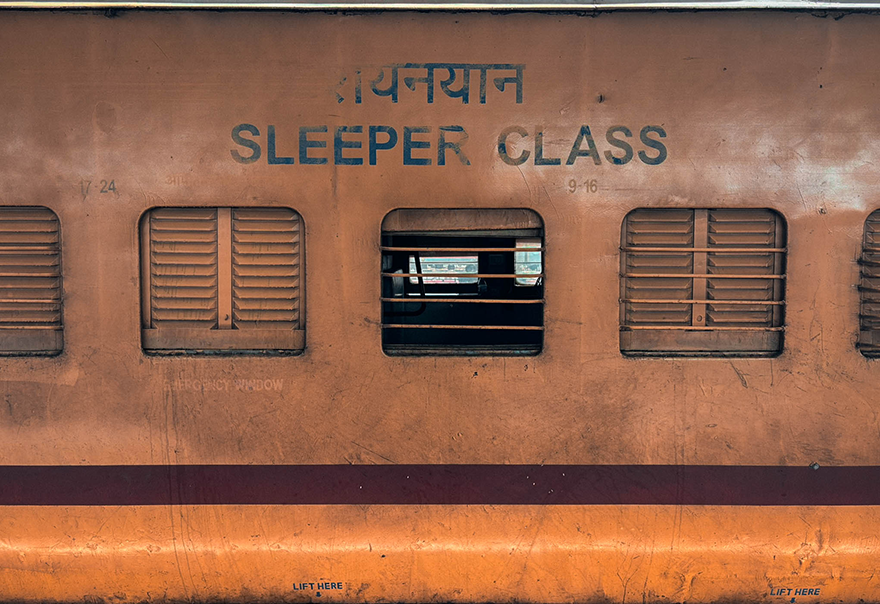
Once I had boarded and settled into my berth – an upper in a 2AC coach, perfectly spaced from the end doors, at least the sleep will be peaceful, the familiar conversations in a long-distance train began to surface. I could hear a family mildly arguing to place their extra luggage underneath a berth that wasn’t theirs. An aunty could be heard asking someone to adjust to another berth (which is plain speak for giving up a lower berth and moving to an upper, or sometimes even to another compartment or coach) so that she could be with her family.
The lack of seats was another topic that found many takers in the coach. Opposite mine, on the side berths, a burly couple, most probably in their 30’s, were sharing an RAC seat. The lower berth in my compartment was occupied by a man who had apparently got his ticket through Tatkal, the last-minute booking system of IR, which nevertheless manages to elude the normal public since it is a game of luck, and IRCTC inevitably fails you when it is your turn. He was explaining, almost instructing that Tatkal tickets don’t come easily unless you go through an agent; trying on your own is usually futile. The couple nodded and muttered, “TT se baat kar lenge” – clinging to the standard RAC hope of being able to persuade a TT for a berth. It is a hope shared by all RAC passengers, offered up quietly before boarding and steadily abandoned somewhere after midnight.
Being thin has its advantages. At the very least, you fit into the narrow cruelty of the side berths. They pay the same fare yet are offered neither the width nor the mercy of a four-berth coupe. I felt a mild pity for them. The lady got a call and said, “Ekdum thusam thus bhadi hui hai” – acknowledging that persuading the TT might be tricky this time. The voice at the other end responded, “Sabne EQ lagwaya hoga, nahi to kaise milta?” It sounded less like an explanation but more like a probable theory – one of the many that circulates on trains, offering perhaps comfort if not correctness.
The train finally departed Bangalore, an hour and a quarter behind schedule.
We reached Bangarapet at 1:21 in the afternoon, running a modest one hour and forty-eight minutes late – hardly a delay worth complaining about by Indian Railway standards. Like many towns in India, Bangarapet has also been renamed, though not in the recent flurry of revisions. Its change came much earlier, soon after Independence. The town sits between the gold fields of the Kolar region and was established during the heyday of the Kolar Gold Fields under the Raj. In those days, it was called Bowringpet, named after a British officer whose achievements are now largely forgotten, except for the town that once carried his name. After Independence, the town seems to have shaken off its colonial hangover quicker than most and adopted a name that sat more comfortably on the local tongue - Bangarapet.
Soon after, we crossed Varadapura, an archetypal small Indian station. Two platforms, largely empty, save for a lone signalman holding up a green flag as the train passed through. A bright, red bougainvillea draped over the entrance of the modest, box-like station building. It is a sight which draws you in – the red blooms breaking the monotony of the white and yellow platforms and the endless blue of the sky. It was unexpectedly pretty - perhaps not quite at Ruskin Bond’s level, but certainly worth noticing. Bisanattam followed soon after. Here, bougainvilleas lined the platform walls, which were just a simple, unbroken row of whitewashed concrete grills beyond which lay the fields. The train did not slow for long, and the colours slipped past almost too quickly, but for a moment it felt like a reminder that on the railway network, it’s the smallest stations which carry the most stories. only for those who happen to be looking out of the window at the right time.
The train trundled along and reached Tirupati, where my temporary good fortune of having the entire lower berth to myself, reading and enjoying the last warmth of the sun, came to an end. An old man, frail, barely able to stand under the weight of his bag, supported by his son, came in. They were speaking in Telugu, and I could make out from the fragments that they are from Kharagpur and came to Tirupati to visit the temple. The son had his berth in the accompanying coupe. I immediately braced myself for the inevitable question. Mentally, I prepared to respond in the simplest way to negate any possibility of my shifting elsewhere. To my surprise, it was chaste Hindi that greeted me.
“Aap single ho?”
Yes.
“Aap next wale berth mein shift ho jaoge? Lower berth hai.”
The offer was tempting. A lower berth and in 2 Tier. For a moment, the journey seemed to ease itself. But the possibility was shot down as quickly as it appeared. They were getting down at Vishakhapatnam. My destination was still far away, and the train, indifferent to small negotiations, continued on its way.
Late trains mean grumpy passengers. Trains that are expected to get even later, as this one was, mean grumpy passengers but happy hawkers. Amidst the cries of chai-kaffee, one can begin to spot the differences - ones which are more rooted in local flavours. Bangalore offered aloo samosas, Tamil Nadu gave dosas for dinner, and as we entered Andhra, these gave way to onion samosas. Someone even had a differentiation strategy from the standout of the deep-fried, greasy samosas and aloo chops - fruit salad - something I haven’t come across on this route. I didn’t venture to try. Late trains also mean dirty washrooms, and I have had my share of visiting dingy, smelly places.
I woke at 5:30 to the snoring of others and the dry, occasional coughs of the man from Tirupati, who was to get down at Vizag. I was groggy, short on sleep, and with very cold feet – I had underestimated the AC and overestimated my tolerance for it that I did not take any sheet to wrap myself. I shifted a few times and managed to get another fifteen minutes or so of sleep before the sounds of luggage being shifted, voices, and a light being turned on in the dark coach finally ended my night.
IR, over time, teaches you small lessons in travelling. The experienced traveller wakes early to wash and freshen up while the washrooms are still dry and usable, before they descend into a damp, foul-smelling watery mess. The novice wakes up late and, when decides to freshen up, is relegated to use these smelly rooms, or waiting in line for a chance at perhaps the only one which is still in usable form, while the cleaning staff is nowhere in sight – already swamped by distress calls of many such passengers. I have seen this ritual often, and that morning was no different - people hovering, waiting, resigned.
As the train approached Vizag, it slowed down, inching forward with care, pausing in between as if its arrival on time or before time wouldn’t be looked at kindly. There was no urgency to it – it was already late, and everyone will get there eventually. I opened the coach door, expecting a blast of cold air to finish the job the AC had already begun. Rather, I felt warmth and the smell of burning wood.
Near the tracks, a group of men and women stood wrapped in shawls, mufflers, and open sweater huddled around a burning log. This, evidently, was winter as Vizag understood it. I stood at the door in my buttoned-up shirt and trousers, mildly happy to have escaped the freezer inside the coach. I checked the weather app – twenty-two degrees, feeling like twenty-four. And people were wearing sweaters.
The sun rose hesitantly outside the Vizag station, as if unsure of whether it was worth the effort. From the door, the day announced itself in quiet grandeur – a pale orange light filtered through the coconut palms, catching on the rails and briefly gleaming as if something newly made. With a jerk, the train moved forward, its red flank sliding past gravel, weeds, and the casual disorder of trackside life.
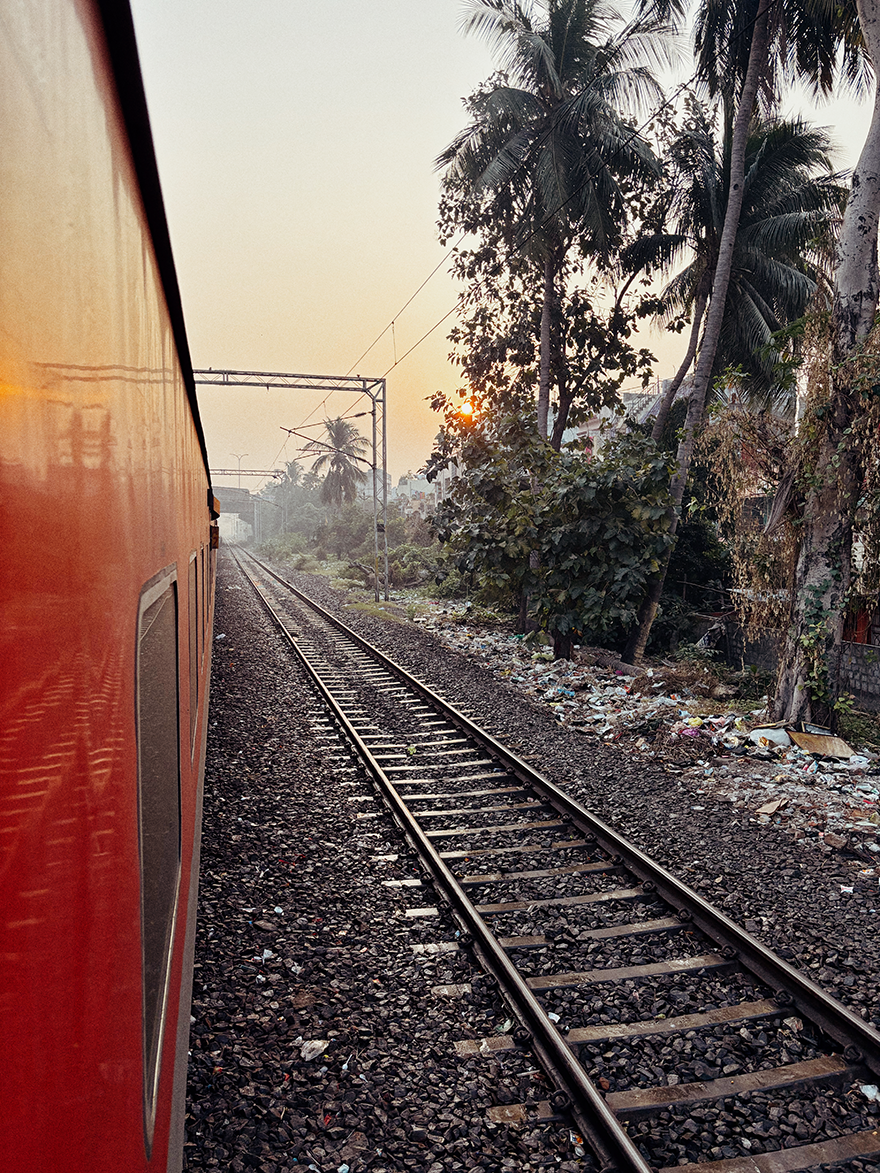
You can never have your way in Indian Railways if you are impatient. Raised voices won’t achieve much; there are others equally as aggrieved as you. Rather, a thoughtful gesture, a sincere, warm smile, and a polite request achieves much more.
If the night noises don’t wake you, the cries of chai-kaffee will. They pierce cleanly through a snore, is louder than an alarm, and almost always around 6:30 at morning. I ordered a tea – not luxury, but essential. There was a glaring gap between the tea and the rim. Equal part disappointed and angry, I controlled and asked in as calm a voice as possible to fill it a bit more. Without registering even a sign of irritation, or an acknowledgement, or a word, he obliged. The tea was good – hot, sweet, slightly frothy. A small, private win.
Less encouraging was the delay: two hours and forty-five minutes. Enough to miss my connection at Kharagpur. I finished the tea, accepted the fact, and watched the morning continue. I picked up the book again. Paul had now left Chicago and was southbound to Laredo on the Lone Star.
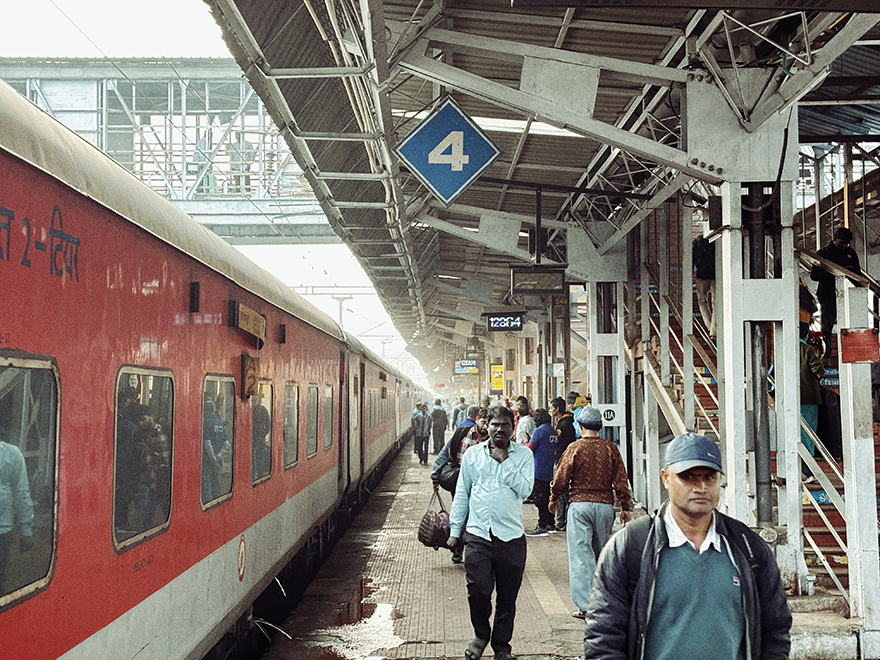
One line from Paul’s writing stayed with me: the air traveller can be jetted to any climate at short notice, but the railway passenger has the satisfaction of watching the weather change hour by hour, noticing even its smallest alterations. And I agreed unconditionally. There are a few other ways to experience such gradual shifts – of light, temperature, and mood than on a journey which refuses to hurry.
Home was still some distance away, but that hardly mattered just then. The coach swayed steadily, the wheels ran on, and a pale December light came in through the windows. Nothing much was happening, and it occurred to me that journeys are understood less at their end than in these stretches where there is nothing to do but notice.
For roughly thirty kilometres, the track runs alongside Chilika Lake. A man-made saltwater lake, vast enough to stretch the eye until water and sky meet in a dull grey line. The train showed none of its earlier playfulness here. This was speed - unapologetic and insistent enough to make the coach shudder that it was difficult to stand on one’s feet. Yet, I dared to. I left the cold confines of the coach and made my way outside.
I pulled the door open and went forward just enough to watch. The water was a sheet of pale blue, almost glassy under the sun, lapping gently at the embankment which separated the tracks from the ground. In the far distant shores, boats were out fishing. Closer, I could make out the decrepit mud huts and patches of green-brown crops planted. It was quietly enchanting, a stretch I could compare only to parts of the railway line in Kerala, a journey I took years ago. The spell didn’t last long.
“Oi! Close the door!”
I turned, irritated, to see a burly man in a blue IRCTC uniform - broad cheeks, no wares in sight. A vendor between rounds, perhaps. Arguing didn’t seem worth the effort. I said it was freezing inside, that the warmth felt good, that I’d only just opened it.
He nodded. “Haan. 2AC is always very cold. But outside, the sun feels nice.”
He stayed by the door with me then, both of us watching the lake slide past. After a while, he said, almost casually, “I’ve boated here once. With my family. Sometimes you can see dolphins.” I nodded.
Going on to Kharagpur would now be pointless. I would miss my connecting train scheduled to depart at seven in the evening. My train was already running three and a half hours late. After a few searches for alternatives on the railway app, I settled on a different plan: get down at Bhubaneswar and catch the Sampark Kranti heading to Delhi, which was due to stop at Jamshedpur at 11:22 that night. Not a great hour to arrive anywhere, particularly in winter, but it was not as terrible as the thought of spending a cold, uncertain night at Kharagpur waiting for some midnight train. And I didn’t pack any warm clothes.
I got down at Bhubaneswar well past one in the afternoon, properly hungry by then. It was warmer than I expected. No one on the platform seemed to need a sweater. The station was under renovation. Concrete pillars stood exposed, walkways were blocked off, and dust clung everywhere. I passed through this station two years earlier, when the works had just begun. Timings in railway parlance are very elastic. Unhurried.
After asking around, I made my way out and found a small, busy restaurant near the bus stop. It looked simple enough to make one briefly reconsider hygiene, but hunger has a way of lowering standards, and it was busy. People dropped off their luggage at the entrance near the counter and went inside. Counting the number of luggage, I decided it was worth a try. I ordered a veg thali and called it lunch. It wasn’t memorable or elaborate, but it did what it needed to do - it filled me up.
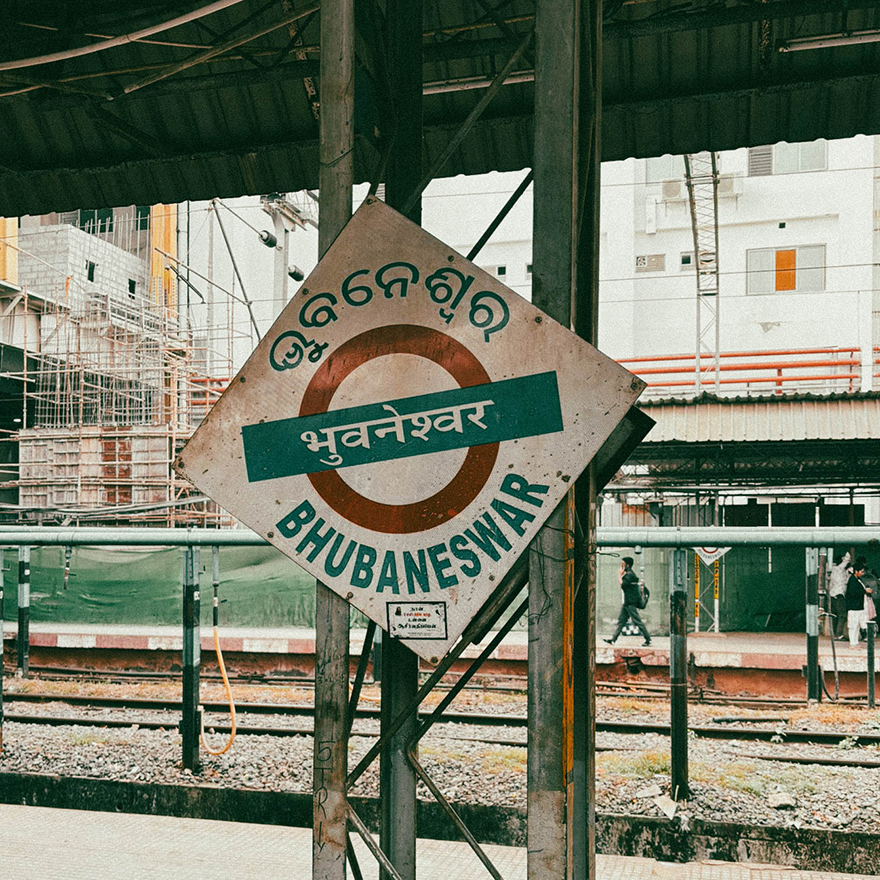
A little before four, the train was shunted onto the platform. My berth this time was in 3AC. That is not usually my preference, but it was a necessity. I try to avoid crowds and crying babies, and 2AC normally does this job well enough. Today’s last minute, frantic booking offered no such luxuries.
I dragged my luggage to my seat, a side lower. Years of travel have taught me that a side lower and a young passenger rarely stay together for long. I didn’t raise my hopes, but I sat down and stretched myself. By then, the lack of sleep and the strains of a long journey were beginning to show. There was a dull but persistent ache behind my temples. After a quick evening tea and a samosa, I closed my eyes. Reading about Paul’s journey would require more patience than I had left.
A little bit after seven, I was woken by a middle-aged woman who had come to sit near my feet on the opposite seat. There was noise nearby. A small group of women – animated but not unfriendly were talking to her. Through snippets, I heard that they were travelling to Delhi, but many seats were not confirmed, and they would have to switch seats. I knew where this was headed. Too tired to convince, I sat up, gathered my things, and gave up the berth in exchange for their side upper. I climbed up and fell asleep again, leaving them to continue their conversation.
I woke a little after half past ten, expecting we would reach Jamshedpur within the hour. I got down to go outside. It was cold, so I pulled out my only sweatshirt and put it on. A glance outside said otherwise. The train was running late by at least an hour, perhaps more.
Then, I noticed the light. It was different from what I grown used to in Bangalore – it was not the cold or warm glare coming from tall buildings of glass, but something harsher and more purposeful. Bright orange and white lights stood on tall masts, chimneys which rose in the distance, long conveyors which cut across the landscape, and warehouses sat lit and buzzing with movement of people and machines. It was a familiar sight, one which I hadn’t seen for months. I watched it pass and knew that home was not far now.
By the time we reached Galudih and then Rakha Mines, the delay was an hour and twenty-five minutes. The train waited there longer than it needed to. Outside, it was properly cold. The platforms were dark and empty, not a soul in sight. Even the station dogs were sleeping near the warmth offered by the closed stall.
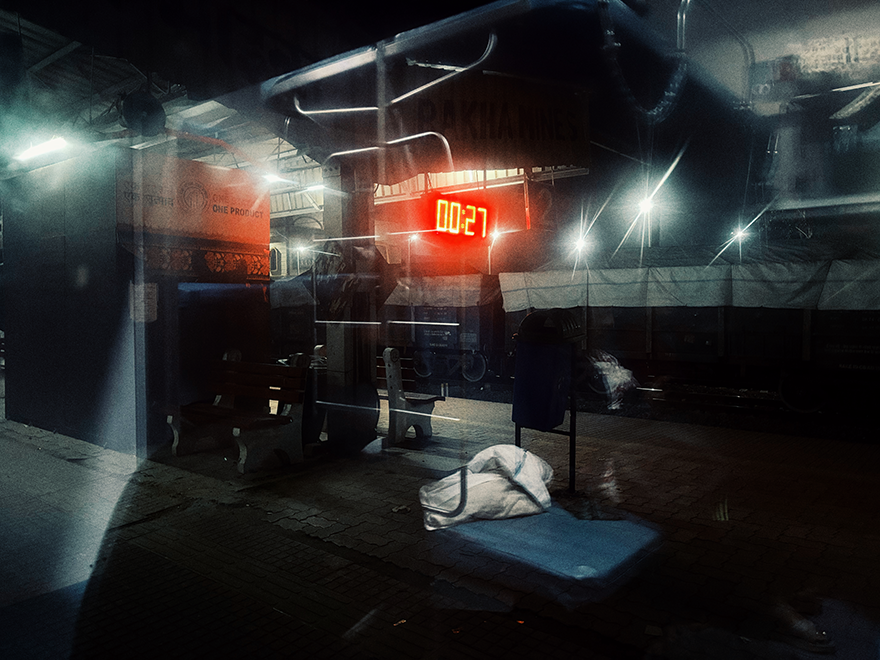
Inside the coach, there was little complaint. The lights were done. Many were to get down at Tatanagar. Apart from a child crying somewhere down the aisle, people remained patient. Resigned, perhaps. It was 12:40 at night. On their phones, tracking apps refreshed frequently, calls are made to people waiting for them, reassuring them that they will be home soon. The internet, with its surety, has filled the gap that conversation once did. Queries are now directed to apps rather than the small banter that used to follow such delays - casual questions to railway staff, speculation, and the shared irritation.
The train moved on eventually. And with that, the journey, delayed and quietly familiar, came to its end at 12:50 AM. A delay of one hour and twenty-eight minutes.
Like it? Subscribe